Kids Homework: Practical Tips to Help Your Child Succeed
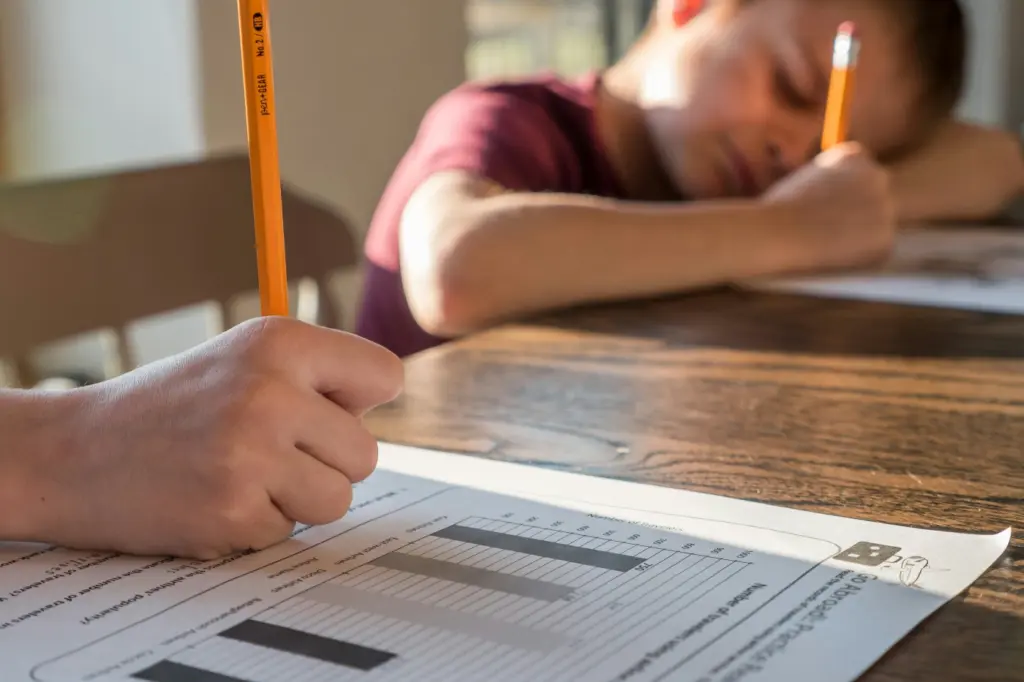
Homework time can be one of the most stressful parts of a school day — for children and parents alike. A child who is tired, distracted, or unsure where to start often ends up frustrated long before the first question is answered. And a parent trying to help while managing household responsibilities can find it just as overwhelming.
The good news is that small, consistent changes to how homework is approached at home can make a significant difference — not just to grades, but to a child’s confidence, independence, and attitude toward learning. Here are practical, tried-and-tested strategies that actually work.
Why Homework Habits Matter Beyond Grades
Homework isn’t just about completing tasks — it’s about practising a set of habits that serve children long after they leave school. Time management, self-discipline, the ability to work independently, and the willingness to push through difficulty are all built (or neglected) during daily homework routines.
Children who develop strong homework habits early tend to carry those patterns into higher classes, competitive examinations, and eventually into their professional lives. The investment made during primary and middle school years pays dividends for decades.
Educators at the best schools in bangalore consistently observe that students who have structured, supportive homework environments at home perform noticeably better not only academically but in classroom participation and self-confidence as well.
Set Up a Dedicated Homework Space
Where a child does homework matters more than most parents realise. A dedicated workspace — one that is consistent, quiet, and associated specifically with study — signals to a child’s brain that it’s time to focus. Doing homework on the sofa with the television on sends the opposite signal.
What Makes a Good Homework Space
- A fixed desk or table used only (or primarily) for study
- Good lighting — natural light where possible, or a focused desk lamp
- All required materials within reach: pencils, erasers, rulers, textbooks, notebooks
- Minimal visual clutter and distractions in the immediate environment
- No background screen time — phones and tablets put away or in another room
The space doesn’t need to be elaborate. A clean kitchen table cleared of other items works just as well as a purpose-built study room, provided the environment is consistent and distraction-free.
Establish a Consistent Homework Routine
Children thrive on routine. When homework happens at the same time each day, it stops being something to negotiate or dread and simply becomes ‘what we do after school.’ The mental energy that would otherwise go into resistance gets redirected into the work itself.
The timing depends on the child and the family’s schedule, but two broad approaches work well for most children:
- Homework immediately after school (with a short snack break) — works well for children who lose momentum if they rest too long and find it hard to restart
- Homework after an hour of free play or physical activity — works well for children who need to decompress before they can focus
Test both and observe which produces more focused, less resistant homework sessions. The right routine varies by child — consistency within whichever routine you choose is what matters most.
Many parents of students at the top rated schools in bangalore report that establishing a non-negotiable homework time — rather than leaving it open-ended — was the single most impactful change they made to their child’s study habits.
Teach Children to Plan Before They Begin
One of the most common reasons children stall at the start of homework time is not knowing where to begin. They open their bag, feel overwhelmed by the volume of tasks, and shut down before writing a single word. Teaching children to plan their homework session before starting is a skill that pays off immediately.
A Simple Planning Approach for Children
- List all homework tasks for the day — write them down, don’t try to hold them in memory.
- Estimate how long each task will take — even rough estimates help children see that the total is manageable.
- Decide the order — start with either the hardest task (when energy is freshest) or the quickest one (to build momentum). Both approaches work; let the child experiment.
- Tick off each task as it’s completed — the act of ticking provides a small but real sense of achievement.
Children as young as seven or eight can begin using this approach with light parental guidance. By the time they reach upper primary, they should be doing it independently.
Minimise Distractions During Homework Time
Distraction is the single biggest enemy of efficient homework. A child who spends 90 minutes on 30 minutes of work — because of repeated interruptions — ends the session exhausted and frustrated, with little to show for the time spent.
Common Distractions and How to Address Them
| Distraction | Why It’s a Problem | How to Address It |
|---|---|---|
| Mobile phone | Notifications pull attention every few minutes | Phone in another room or switched off during homework time |
| Television or streaming | Background sound and visuals compete for cognitive resources | TV off completely — not on mute or in another room |
| Younger siblings | Interruptions break concentration and extend task time | Coordinate so siblings are occupied elsewhere during homework |
| Social media apps | Habit-forming and difficult to self-regulate | Use a website or app blocker during study sessions |
| Hunger or thirst | Physical discomfort reduces focus significantly | Ensure a proper snack and water before homework begins |
| Weak fine motor skills |
Difficulty controlling the pen, trembling or shaking lines |
Fine motor exercises and strengthening activities |
The Role of Breaks in Productive Homework Sessions
Sustained concentration has limits — especially for younger children. Expecting a seven-year-old to sit and focus for an unbroken hour is unrealistic and counterproductive. Short, intentional breaks improve focus during work periods rather than undermining it.
A simple and effective structure: 20 to 25 minutes of focused work, followed by a 5-minute movement break (walk around, stretch, get water) — then back to work. For older children and longer sessions, 40-minute work blocks with 10-minute breaks work well.
The key is that breaks are timed and bounded — not open-ended rest periods that turn into extended screen time and make resuming work even harder.
How Parents Can Help Without Doing the Work
There’s a fine line between supporting a child’s homework and doing it for them. When parents routinely step in to provide answers, children miss the productive struggle that builds understanding and resilience. The goal is to be a coach, not a substitute.
- Ask guiding questions rather than giving answers: ‘What do you know about this topic?’ or ‘Where could you look that up?’
- Praise the effort and the process, not just the outcome — ‘I can see you really worked hard on that problem’ builds more than ‘Well done, you got it right’
- Sit nearby (but not hovering) for younger children who need reassurance that help is available if genuinely needed
- Resist the urge to correct every small mistake before submission — some errors are valuable learning opportunities when marked by the teacher
Parent communities at the best icse schools in bangalore often share that the shift from ‘helper’ to ‘encourager’ — trusting the child to work through difficulty with support rather than rescue — produces more capable, confident students within a matter of weeks.
Building Long-Term Study Habits
The homework strategies above are most effective when they’re part of a wider culture of learning at home. Children who see their parents read, ask questions, and value knowledge naturally absorb similar attitudes. A few habits that reinforce learning beyond the homework desk:
- Reading together regularly — even for 15 minutes — builds vocabulary, comprehension, and a relationship with books that supports every academic subject
- Discussing the school day with genuine curiosity rather than just asking ‘how was school?’ — specific questions (‘What was the most interesting thing you learned today?’) produce richer conversations
- Visiting libraries, museums, and science centres — learning that happens outside the classroom reinforces what happens inside it
- Celebrating effort and improvement, not just achievement — children who are praised for working hard develop more persistence than those praised primarily for being clever
The most academically engaged students at the icse schools bangalore and similar institutions tend to come from homes where curiosity is encouraged and learning is treated as something enjoyable rather than merely obligatory.
Key Takeaways
- A dedicated, consistent homework space reduces resistance and improves focus
- A fixed daily homework time turns study into routine rather than negotiation
- Teaching children to plan their tasks before beginning prevents overwhelm and builds independence
- Minimising distractions — especially screens — is the fastest way to shorten homework time while improving quality
- Timed breaks improve focus; open-ended breaks undermine it
- Parents who coach rather than rescue build more capable, confident children
Conclusion
Good homework habits are built gradually, through consistent daily practice rather than dramatic interventions. Start with one change — a fixed homework time, a cleaner workspace, or a simple task list — and build from there. Over weeks and months, small adjustments compound into meaningful differences in how your child approaches learning: with more confidence, more focus, and more genuine engagement. That shift is worth every bit of effort it takes to create it.
FAQs
- How long should homework take for primary school children?
As a general guideline, 10 minutes per year of school is a widely used benchmark — so a Class 3 student might do about 30 minutes of homework per day. If homework consistently takes much longer, it may be worth discussing with the class teacher.
- What should I do if my child refuses to do homework?
Stay calm and consistent. Avoid power struggles — instead, acknowledge the resistance (‘I know you’re tired’) and hold the boundary calmly (‘homework still needs to get done before TV’). Routine and predictability reduce refusal over time.
- Should I check my child’s homework before they submit it?
A quick review is fine — looking for missed questions or clearly misunderstood instructions. Correcting every error before submission removes a valuable feedback loop between child and teacher.
- How do I help a child who gets stuck and gives up?
Teach them to identify what they do know, then find the specific sticking point. Break the problem into smaller steps. Encourage them to try before asking for help. Praise the attempt, not just the answer.
- Is it better to do homework straight after school or later in the evening?
It depends on the child. Some focus better with a short break first; others lose momentum and find it harder to restart. Try both for a week each and observe which produces calmer, more focused sessions.
- How can I make homework less stressful for the whole family?
Structure and consistency remove most of the friction. When homework time, location, and expectations are predictable, there’s far less to negotiate each day — which is where most family stress around homework originates.
- At what age should children start doing homework independently?
By Class 4 or 5 (around 9–10 years), most children are capable of starting and working through homework independently, with a parent available for genuine questions. Independence should be encouraged progressively from the early primary years.
- What if my child says they have no homework?
Make it a habit to check the school diary or app together each day. Use ‘no homework’ days for reading, revision, or creative projects — consistent daily learning time is valuable regardless of what’s officially assigned.