The Quit India Movement: India's Bold Step Towards Independence
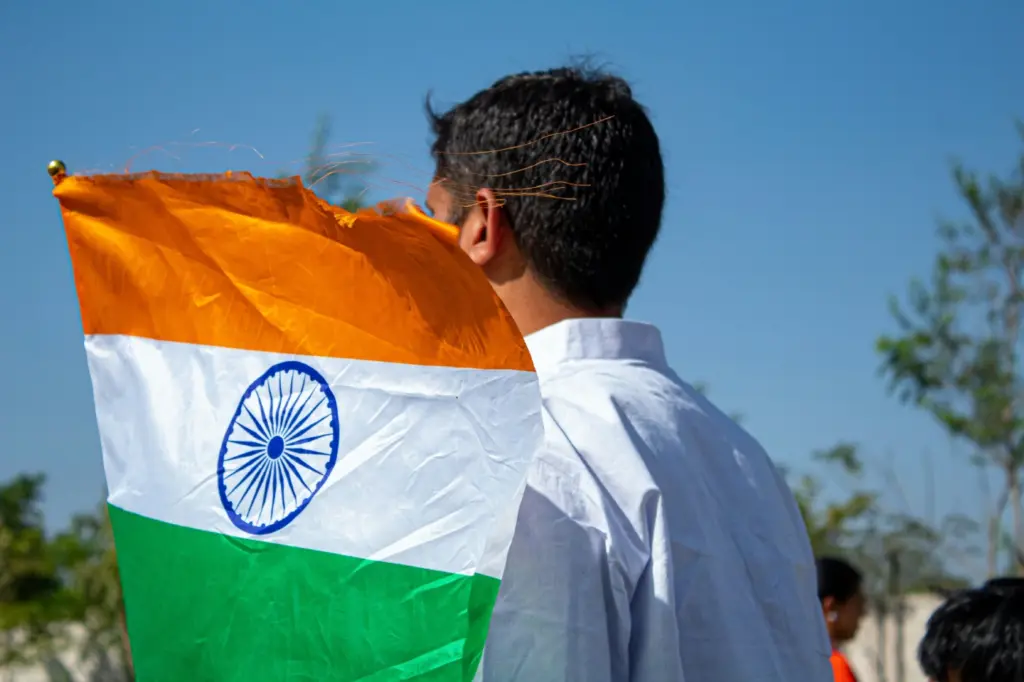
The Quit India Movement, launched on 8 August 1942, stands as one of the most powerful and defining moments in India’s freedom struggle. It was a mass civil disobedience movement that sent a clear message to the British colonial government: India demanded complete and immediate independence. Led by Mahatma Gandhi and the Indian National Congress, the movement mobilised millions of ordinary Indians across the country. Students, workers, farmers, and urban professionals all participated, making it a truly nationwide uprising unlike anything that had come before.
Understanding the Quit India Movement is essential for any student studying Indian history, particularly those preparing for board examinations and competitive tests. The movement reveals how ordinary people can drive extraordinary change through collective action and moral courage. It also illustrates the challenges of sustaining a mass movement under colonial repression. Schools that prioritise history education, including many of the best schools in bangalore, spend considerable time helping students understand the significance of this chapter in India’s past.
Background and Context
By the early 1940s, India had endured decades of British colonial rule. Multiple movements, negotiations, and political campaigns had failed to deliver independence. The situation grew more urgent with World War II, which had drawn India into conflict without the consent of its people. The British government promised eventual self-government through the Cripps Mission of March 1942, but the terms were widely rejected by Indian leaders as inadequate and conditional. Frustration with the British position had reached a peak, and many in the Congress felt that a decisive movement was necessary.
Gandhi and other leaders believed the time had come for one final, determined push for independence. The global political climate, with colonial powers weakened by war, seemed to offer an opportunity. Gandhi famously described the situation as an open rebellion, urging Indians to “Do or Die” in pursuit of freedom. This rallying call captured the spirit of the moment and energised the entire nation.
The Launch of the Movement
On 8 August 1942, the All India Congress Committee passed the Quit India Resolution at its session in Bombay (now Mumbai) at Gowalia Tank Maidan. Gandhi addressed a massive crowd and delivered his famous “Do or Die” speech, declaring that every Indian must either work for independence or die in the attempt. He called for a non-violent mass movement demanding that the British immediately leave India.
Within hours of the resolution being passed, the British government moved swiftly. Gandhi, along with the entire Working Committee of the Congress, was arrested in the early hours of 9 August 1942. This pre-emptive crackdown was intended to suppress the movement before it could gain momentum. Instead, it had the opposite effect, as news of the arrests spread across the country and triggered spontaneous protests and uprisings in virtually every region of India.
Key Leaders and Their Roles
| Leader | Role in the Movement |
|---|---|
Mahatma Gandhi | Initiated and inspired the movement with the "Do or Die" call |
Jawaharlal Nehru | Leading figure of the Congress; arrested immediately |
Sardar Patel | Organised Congress support; arrested by the British |
Aruna Asaf Ali | Hoisted the Congress flag at Gowalia Tank after leaders were arrested |
Jayaprakash Narayan | Led underground resistance and guerrilla operations |
Ram Manohar Lohia | Coordinated underground radio broadcasts and resistance networks |
With the top leadership imprisoned, the movement relied on second-tier leaders and ordinary citizens. Aruna Asaf Ali became a symbol of defiance by hoisting the national flag at Gowalia Tank after Gandhi’s arrest. Jayaprakash Narayan and Ram Manohar Lohia operated underground networks, keeping resistance alive through clandestine operations. Students and youth played a crucial role in organising protests, strikes, and acts of civil disobedience across the country.
The Spread of the Movement Across India
The movement spread rapidly across India, manifesting in different forms in different regions. In Bihar, Uttar Pradesh, and Maharashtra, protesters attacked symbols of British authority such as government buildings, post offices, railway stations, and telegraph lines. In Satara and Talcher, underground parallel governments were set up to provide local governance independent of British authority. In Midnapore, Bengal, a local government called the Tamluk National Government operated for several years.
Students from schools and colleges joined in large numbers, going on strikes and participating in demonstrations. Many left their studies temporarily to join the movement, reflecting the depth of the nation’s commitment to freedom. Across top rated schools in bangalore and other cities, educational institutions saw significant student participation. The movement demonstrated that the desire for independence was not limited to political elites but was a truly grassroots aspiration.
British Response and Repression
The British response to the Quit India Movement was severe. Over 100,000 people were arrested across the country. The military was deployed in many areas to suppress protests, and firing on crowds resulted in hundreds of deaths. Villages were collectively fined, and leaders were imprisoned for extended periods. Gandhi himself was held at the Aga Khan Palace in Pune, where he faced personal tragedy with the deaths of his personal secretary Mahadev Desai and his wife Kasturba Gandhi while in custody.
Despite this heavy-handed repression, the movement could not be fully suppressed. Underground networks continued to operate, and acts of sabotage against colonial infrastructure persisted for years. The British government, already stretched by the demands of World War II, found the cost of maintaining control over a resistant India increasingly unsustainable. The Quit India Movement, even if it did not achieve immediate independence, significantly weakened British authority and will.
Impact and Legacy of the Quit India Movement
The Quit India Movement had a profound and lasting impact on India’s path to independence. It demonstrated the capacity of ordinary Indians to challenge colonial power on a mass scale. It radicalised a new generation of freedom fighters and gave rise to underground resistance networks that would continue to operate in various forms. Politically, it showed the British government that maintaining colonial control over India would be increasingly costly and untenable.
The movement also had a unifying effect across India’s diverse communities. People of different castes, religions, regions, and classes joined together in a common cause. This unity was a significant achievement in a country as diverse as India. The legacy of the Quit India Movement is celebrated every year on 9 August, known as Quit India Day or August Kranti Diwas. Schools across the country, including those recognised as top icse schools in bangalore, mark this day with programmes that help students connect with the sacrifices made for their freedom.
Key Takeaways
- The Quit India Movement was launched on 8 August 1942 under Gandhi’s leadership with the slogan “Do or Die.”
- The British arrested Gandhi and all top Congress leaders immediately after the resolution was passed.
- The movement spread across India with students, workers, and farmers playing major roles.
- Underground networks led by figures like Jayaprakash Narayan kept resistance alive despite mass arrests.
- Over 100,000 people were arrested and hundreds killed during British repression of the movement.
- The movement weakened British authority and accelerated India’s path to independence in 1947.
Conclusion
The Quit India Movement remains one of the most significant chapters in India’s independence struggle. It was a moment when an entire nation came together with extraordinary courage and determination to demand its rightful freedom. The bravery of ordinary people who faced arrest, violence, and hardship for the sake of their country’s future continues to inspire generations. Teaching this history with depth and honesty is something the best icse schools in bangalore prioritise, knowing that understanding the past equips students to be more informed and engaged citizens of the future.
FAQs
1. When was the Quit India Movement launched?
The Quit India Movement was launched on 8 August 1942 when the All India Congress Committee passed the Quit India Resolution at Gowalia Tank Maidan in Bombay.
2. What was Gandhi’s famous slogan during the Quit India Movement?
Gandhi’s famous call was “Do or Die,” urging every Indian to either work for independence or die in the attempt.
3. Why were Gandhi and other Congress leaders arrested immediately?
The British government moved pre-emptively to suppress the movement by arresting Gandhi and the entire Congress Working Committee on 9 August 1942, the morning after the resolution was passed.
4. What was the role of students in the Quit India Movement?
Students played a vital role by going on strikes, participating in protests, and joining underground resistance networks. Many left their studies temporarily to support the movement.
5. Who hoisted the Congress flag after Gandhi’s arrest?
Aruna Asaf Ali hoisted the Congress flag at Gowalia Tank Maidan on 9 August 1942, becoming a symbol of defiance after the top leadership was arrested.
6. Did the Quit India Movement achieve its immediate goal?
The movement did not achieve immediate independence, as it was suppressed by the British. However, it significantly weakened British authority and accelerated India’s path to independence, which came in 1947.
7. What is August Kranti Diwas?
9 August is celebrated as August Kranti Diwas or Quit India Day in India to commemorate the launch of the Quit India Movement in 1942.
8. What was the Cripps Mission?
The Cripps Mission was a British proposal in March 1942 that offered India a form of dominion status after the war. It was rejected by Indian leaders as insufficient, contributing to the decision to launch the Quit India Movement.