History Behind India's National Symbols Explained
Every country has a set of symbols that capture its identity in a single image or word, and the national symbols of India do exactly that. Each one, whether it is the flag, the emblem, or the national animal, carries a story rooted in the country’s history and values.
Understanding where these symbols come from adds meaning to something most of us see every day without a second thought. This article walks through the origins of India’s major national symbols and why each one was chosen.
What Are National Symbols and Why Do They Matter
National symbols are objects, images, or ideas officially adopted to represent a country’s culture, history, and unity. They appear in classrooms, government documents, currency, and public ceremonies.
For a country as diverse as India, these symbols act as a common thread. They remind citizens of shared history even when languages, traditions, and regions differ widely.
The National Flag: Tiranga
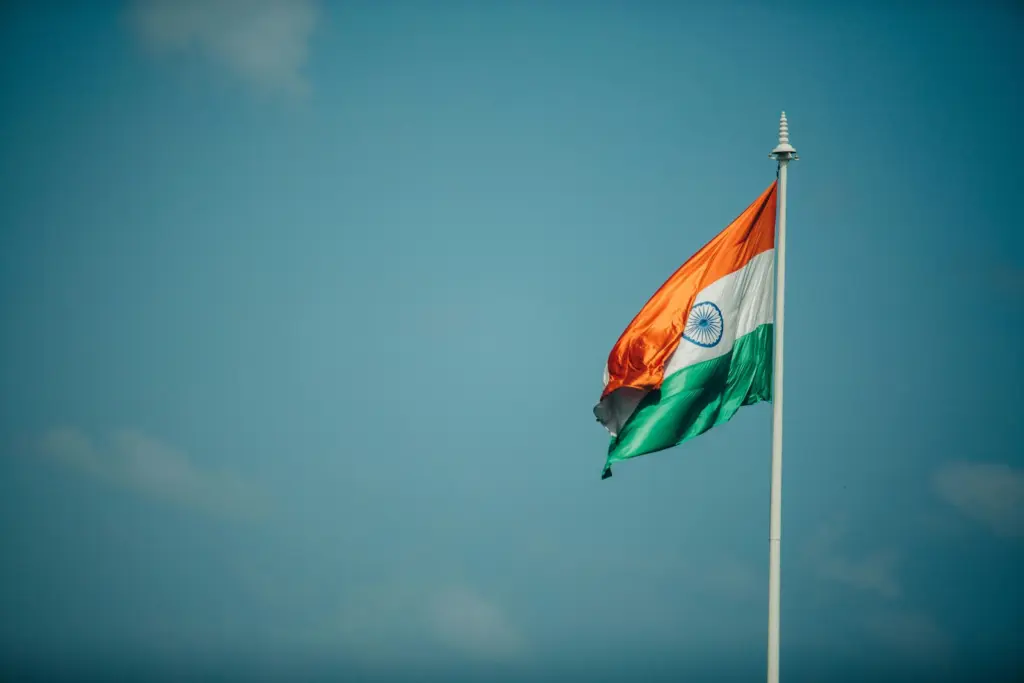
The Indian national flag, commonly known as the Tiranga, was adopted on 22 July 1947, just before independence. It was designed based on the Swaraj flag, with modifications by a committee led by Pingali Venkayya.
The saffron band represents courage and sacrifice, white stands for truth and peace, and green symbolises fertility and growth. At the centre sits the Ashoka Chakra, a 24-spoke wheel representing the eternal wheel of law.
The National Emblem of India
India’s national emblem is an adaptation of the Lion Capital of Ashoka, originally erected around the third century BCE at Sarnath. It was adopted as the official state emblem on 26 January 1950, the day India became a republic.
The emblem shows four lions standing back to back, though only three are visible from any single angle. Below them sits the phrase Satyameva Jayate, meaning truth alone triumphs.
The National Anthem and National Song
Jana Gana Mana, written by Rabindranath Tagore, was adopted as India’s national anthem in 1950. It was originally composed in Bengali and later set to its present tune.
Vande Mataram, written by Bankim Chandra Chattopadhyay, holds the status of national song. It played a significant role in India’s freedom movement and is given equal respect alongside the national anthem.
National Animal, Bird, Flower, and More
Beyond the flag and emblem, India has designated several natural symbols that reflect its biodiversity and cultural values.
|
Symbol |
Chosen Representative |
Significance |
|---|---|---|
|
National Animal |
Bengal Tiger |
Strength and grace, adopted in 1972 |
|
National Bird |
Indian Peacock |
Beauty and grace, official since 1963 |
|
National Flower |
Lotus |
Purity and resilience despite difficult surroundings |
|
National Tree |
Banyan |
Longevity and shelter, reflecting India’s joint family values |
|
National Fruit |
Mango |
Widely grown across the country and deeply tied to Indian culture |
|
National River |
Ganga |
Cultural and spiritual significance across generations |
The Ashoka Chakra and Its Meaning
The Ashoka Chakra, seen at the centre of the national flag, has 24 spokes representing the passage of time and the continuity of life. It is derived from the Lion Capital of Ashoka and reflects the ideals of dharma, or righteous duty.
Lesser-Known National Symbols
Apart from the widely known symbols, India has also designated a national aquatic animal, the Ganges river dolphin, and a national heritage animal, the elephant, both recognised for their ecological importance.
These lesser-known symbols highlight India’s ongoing effort to protect its natural heritage alongside its cultural one.
Why Children Should Learn About National Symbols
Learning about national symbols early helps children connect with their country’s history in a simple, visual way long before they can understand complex historical events.
Many top icse schools in bangalore include dedicated units on national symbols and heritage as part of their social studies curriculum, encouraging young learners to take pride in India’s identity from an early age.
Parents researching best schools in bangalore for the primary years often prioritise curricula that blend academics with civic and cultural learning, since this shapes how children relate to their country as they grow older.
Even at the nursery schools in bangalore level, simple stories about the national bird or the national flower help children form an early, age-appropriate connection with these symbols.
Key Takeaways
- India’s national symbols were largely adopted around independence and the formation of the republic
- The flag, emblem, anthem, and song each carry distinct historical origins and meanings
- Natural symbols like the tiger, peacock, and lotus reflect India’s biodiversity and values
- Introducing these symbols early helps children build a stronger connection with their national identity
Conclusion
The national symbols of India are more than official designations. Each one carries a piece of the country’s journey, from ancient carvings to the freedom movement to the values it continues to hold onto today.
Knowing this history turns familiar sights, like the flag on Republic Day or the emblem on a passport, into something far more meaningful.
FAQs
1. Why was the lotus chosen as India’s national flower?
The lotus was chosen because it grows in muddy water yet blooms clean and beautiful, symbolising purity and resilience despite difficult circumstances.
2. Who designed India’s national flag?
The flag’s design is credited to Pingali Venkayya, with modifications made by a committee before its final adoption in 1947.
3. Why does the Ashoka Chakra have 24 spokes?
The 24 spokes are said to represent the 24 hours of the day, symbolising the continuous cycle of progress and life.
4. When was the national anthem officially adopted?
Jana Gana Mana was adopted as India’s national anthem by the Constituent Assembly in 1950.
5. What is the difference between the national anthem and the national song?
The national anthem, Jana Gana Mana, is used in official and formal settings, while the national song, Vande Mataram, is honoured for its role in the independence movement, though both hold equal respect.
6. Does India have an official national sport?
India does not currently have an officially declared national sport, despite common assumptions about hockey.
7. Why is the banyan tree considered a national symbol?
The banyan tree was chosen for its longevity and its wide, sheltering canopy, which reflects values of endurance and joint family structures in Indian culture.